

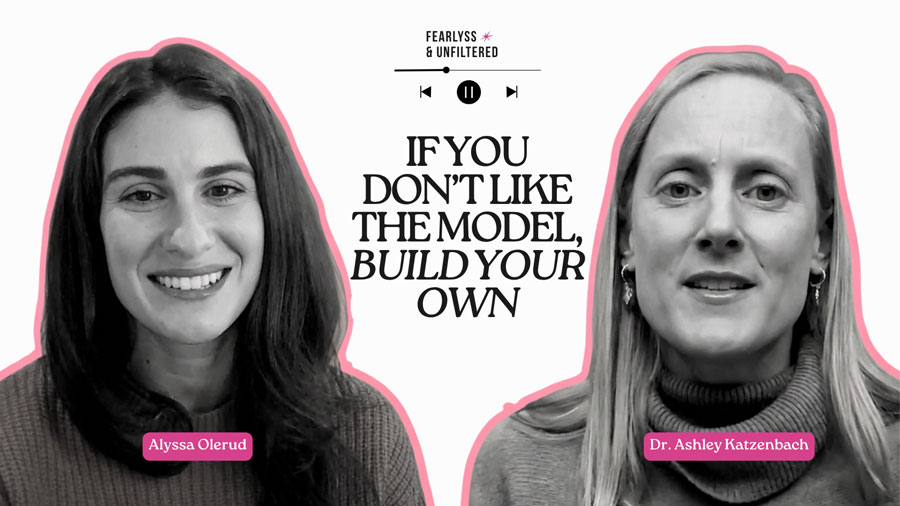
Dr. Ashley Katzenbach spent 15 years inside the traditional insurance-based physical therapy model. Three patients an hour. Twenty minutes of real hands-on time if she was lucky. A system that told her what she was allowed to treat based on a code, not what she actually saw in front of her.
At 40, she called it her midlife crisis.
I sat down with Ashley, founder of Cape Concierge Physical Therapy, for this episode of Fearlyss & Unfiltered, and what started as a health conversation turned into one of the more honest reinvention stories we’ve had on the show.
A sentence that changed everything
One of Ashley’s patients, watching her burn out inside a system she didn’t build and didn’t believe in, said something simple that stuck. She went home that same day and filed her LLC. No business background. No plan. Just the next right step.
What she’s built since then, and what it took to get there, is a big part of this episode.
The body knows something you don’t
Ashley also walked me through a pattern she sees constantly in her practice: people spending years treating a symptom in one part of their body while the actual cause sits somewhere they’d never think to look. She has a name for it, and once she explained it, I couldn’t stop noticing it in my own life.
She also gets into a question I know a lot of women think about quietly as they get older: what’s actually worth taking to support joints and hormones, and what’s mostly noise. Her answer isn’t what you’d expect from a wellness feed.
What “balance” actually looks like
Near the end, Ashley got honest about something most founders, parents, and partners don’t say out loud. It’s not a tidy answer, and it’s probably the most relatable part of the whole conversation.
Listen to the full episode
This one covers more ground than I can do justice to here, and honestly, some of it is better heard in her own words. Listen to the full episode of Fearlyss & Unfiltered with Dr. Ashley Katzenbach here:
If any part of this has you thinking about your own foundation, whether that’s your body or the model your business is built on, that’s usually not a symptom to manage. It’s a signal to look at what you’re standing on.